
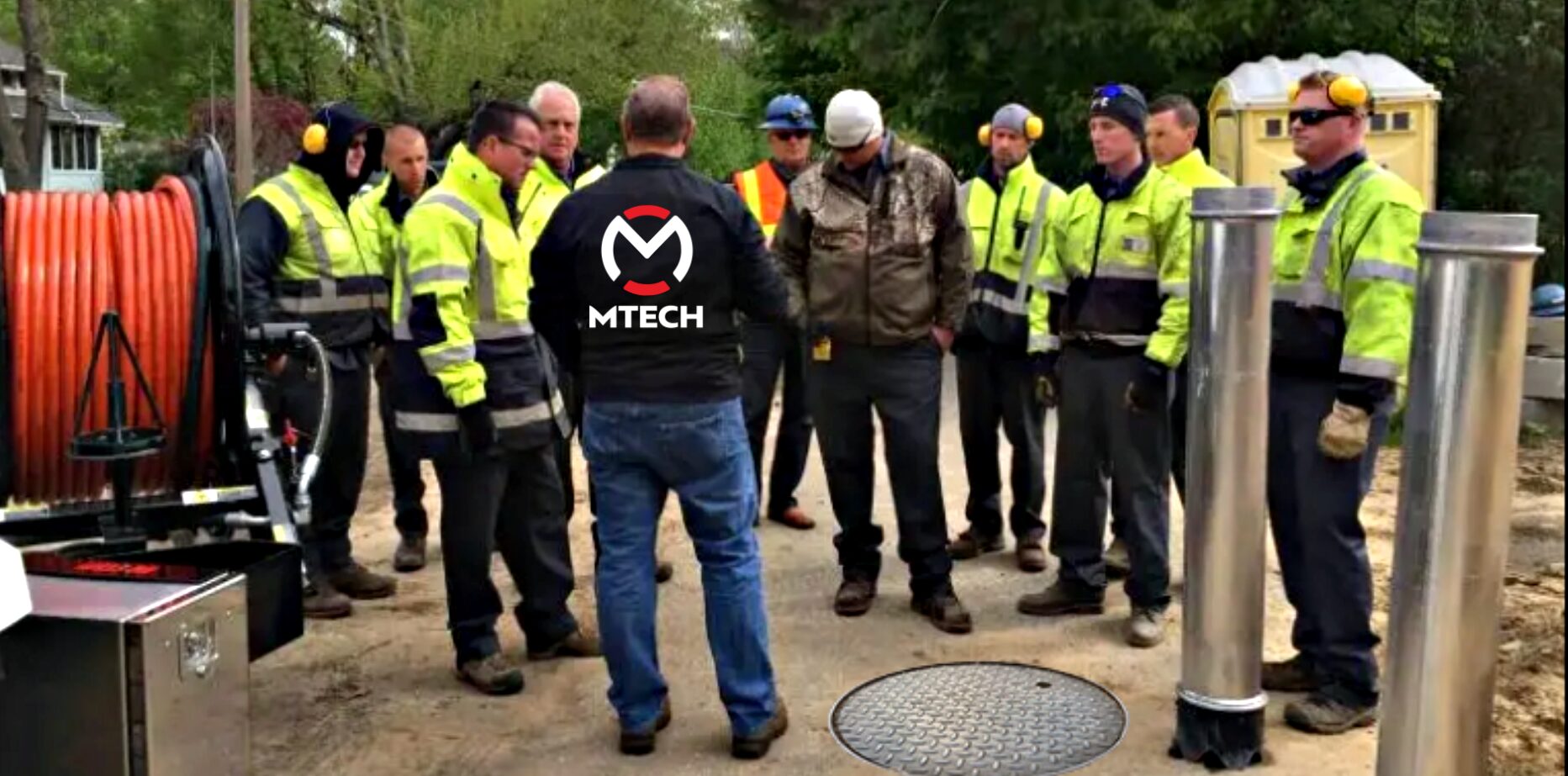
Trainees will gain practice utilizing a body harness, tripod or davit system in the classroom environment. In the event a simulated confined space structure is available at the training location, hands-on will additionally involve actual practice lowering and retrieving trainees using a tripod or davit system. Our hands-on training covers the proper use of gas detection equipment: calibration, bump testing, monitor placement, alarm response, and real-time decision-making.
Confined space entry occurs when a worker physically enters a space that is not designed for continuous occupancy and may have limited means of entry or exit—such as tanks, pits, vaults, or manholes. These environments can present serious hazards including toxic atmospheres, oxygen deficiency, engulfment, or mechanical risks. Because of this, confined space entry rescue requires strict procedures, permits, monitoring, and a fully trained rescue team on standby.
Non-entry rescue is a method of retrieving a worker from a confined space without sending another person inside. This is typically accomplished using pre-rigged retrieval systems such as tripods, davit systems, winches, and harnesses that allow attendants to safely remove an entrant from outside the space. MTech teaches non-entry rescue.
Non-entry rescue is considered the safest and preferred rescue method because it eliminates the need to expose additional personnel to the hazards inside the confined space. Historically, many confined space fatalities involve would-be rescuers entering without proper protection. Non-entry rescue helps prevent those secondary incidents.
Non-entry rescue is not always possible. Non-entry rescue requires proper planning, equipment, and setup before entry begins. If conditions or space configurations prevent non-entry retrieval, a trained and properly equipped entry rescue team may be required. MTech does not provide entry rescue training.
Our training emphasizes:
Any personnel involved in confined space work—including entrants, attendants, supervisors, and safety managers—benefit from understanding both entry procedures and non-entry rescue techniques.
No. MTech’s training teaches confined space safety awareness involving the hands-on protocol described herein. Authorizing a person or employee to enter a confined space or to participate as a member of a confined space entry team or safety team can only be determined by an employer after ensuring people have attained the proper skill levels need as evidenced by training, practice and experience. Put another way, MTech provides knowledge, we do not provide real-life training and practical application which may eventually lead to skill deemed sufficient by an employer to consider an employee qualified to their standard to enter a confined space. Refer to MTech’s document: Understanding OSHA 1910.146 Training vs. Employer Authorization
Working in confined spaces means dealing with hazards you often cannot see or smell. Dangerous atmospheres can develop quickly and without warning, making air monitoring one of the most critical components of any confined space safety program.
Air monitoring is the process of using specialized detection equipment to evaluate the atmosphere inside a confined space—both before entry and continuously during occupancy. These instruments measure key hazards such as:
Without proper monitoring, workers may unknowingly enter an environment that can cause serious injury or death within minutes. Air monitoring provides real-time data so informed decisions can be made about:
MTech’s hands-on training ensures your team understands not just how to operate equipment but how to rely on it confidently. Topics include

