

Navigating public procurement rules presents a constant challenge for municipal leaders. For the partners MTech Company serves, acquiring the right tools for the job without lengthy bidding cycles is a common goal. While competitive bidding is the default, it isn’t always effective for specialized assets.
Understanding the available sole-source supplier purchasing options is critical for maintaining infrastructure, ensuring operational continuity and acting as a responsible steward of taxpayer funds. This process allows public entities to legally procure essential goods and services from a single provider when specific conditions make competition impractical or impossible.
Understanding Sole-Source vs. Single-Source Procurement
In procurement discussions, the terms “sole source” and “single source” are often used interchangeably. However, they represent two distinct legal concepts. Confusing them can lead to compliance issues and rejected purchase orders.
A sole-source provider is the only available vendor for a particular product or service. This market of one is created by external factors like patent rights or exclusive territorial agreements.
Conversely, single-sourcing is an internal decision to select one vendor for convenience or preference, even when other qualified vendors exist. While sometimes justifiable, it requires a much higher burden of proof than a true sole-source acquisition.
For example, an exclusive territorial dealer for premier brands like CUES often qualifies as a sole-source provider. In this scenario, the dealer is the only entity legally authorized to sell and service this new equipment in its designated regions.
When Sole-Source Purchasing Is Legally Justified
Purchasing municipal equipment from a sole-source supplier is justified when competitive bidding won’t work. Three common reasons are territory exclusivity, fleet compatibility and proprietary technology.
1. Territory Exclusivity
Manufacturers often grant exclusive territories to dealers who invest heavily in certified training, specialized diagnostic tools and extensive parts inventories. This legally removes competition from the market.
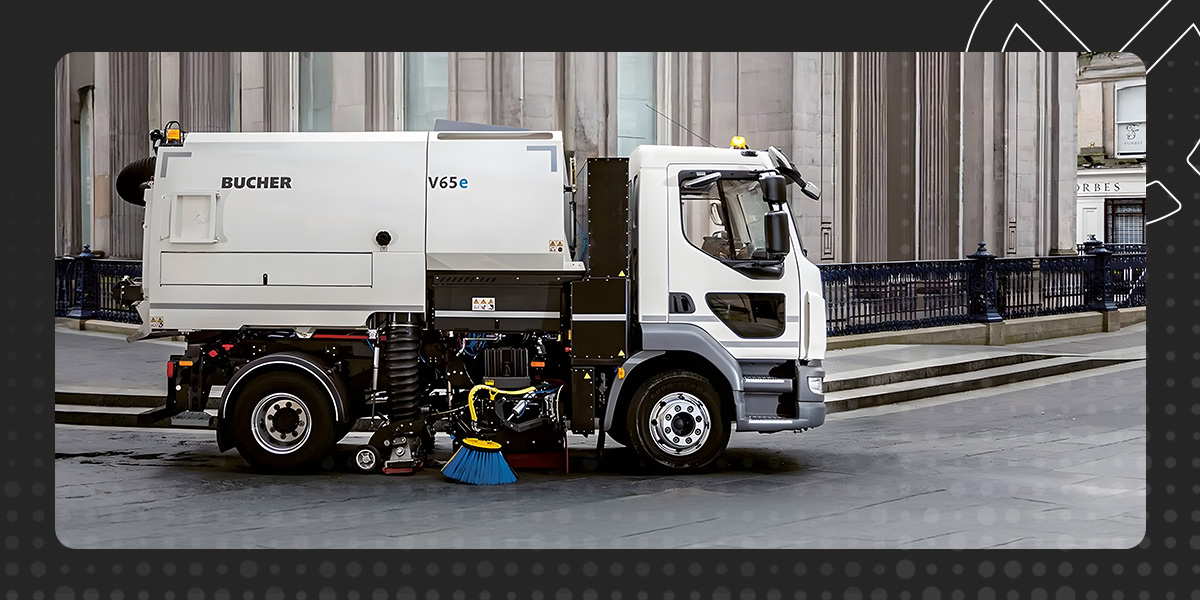
You can’t purchase a new Bucher municipal street sweeper from a generic online catalog for delivery in a dealer’s exclusive territory. The manufacturer’s agreement designates them as the only compliant source.
2. Fleet Compatibility
Fleet standardization is another reason for sole-source purchasing. Introducing a different brand of equipment into an existing fleet can create downstream costs and logistical burdens.
- New operator training: Technicians proficient in one system may need to be retrained, leading to downtime and potential operational errors.
- Redundant parts inventory: Municipalities must stock parts for multiple brands. This can increase carrying costs and complexity.
- Specialized diagnostic tools: Service bays need different software and hardware to support multiple manufacturers. A sole-source purchase to maintain fleet consistency can be a highly cost-effective decision over the asset’s life cycle.
3. Proprietary Technology
Sometimes, a manufacturer’s patented technology creates a market of one. If a specific sewer cleaning nozzle’s fluid mechanics are patented and proven to double debris removal efficiency, or if a sensor provides data no other system can, then that technology is inherently sole-source. The justification is the unique capability that can’t be replicated by competitors.
The Service Promise as a Purchasing Justification
Uptime is everything for critical infrastructure. A sewer camera or vacuum truck that’s out of commission is a potential public health issue. For this reason, service response capabilities are a valid and powerful component of a bid specification.
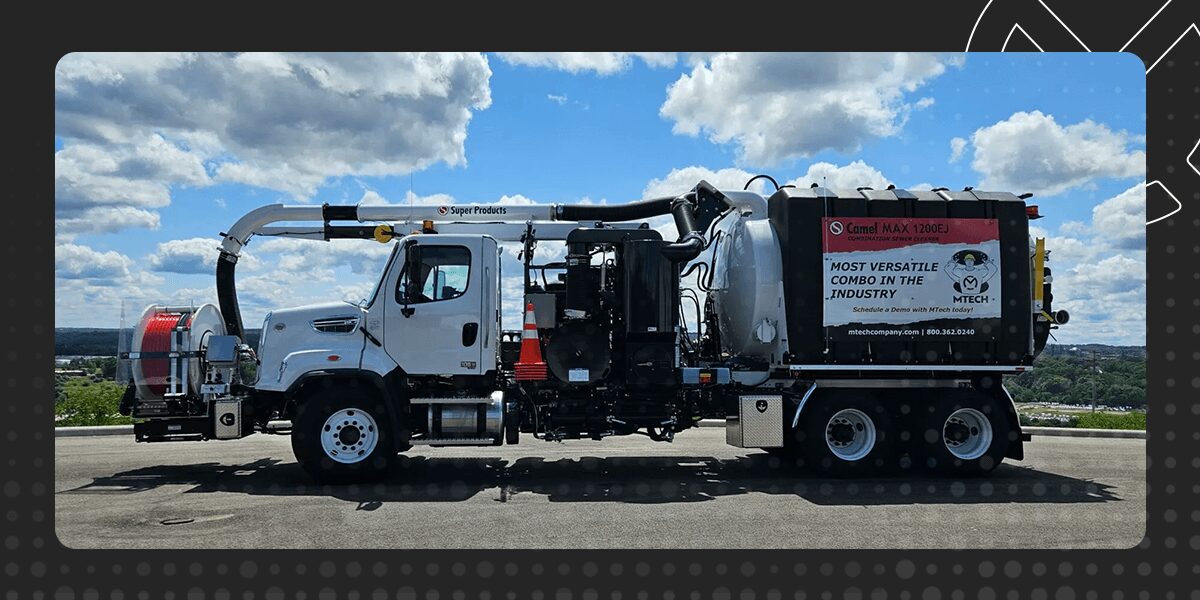
While competitive bids can specify service requirements, a differentiator that often leads to sole-source justification is a vendor’s proven ability to meet highly demanding service-level agreements that other bidders can’t. Vendors who operate primarily as drop-shippers often can’t provide on-site diagnostics, warranty repairs, preventive maintenance on heavy equipment, or on-site service and repairs. In contrast, a full-service dealer operates a fleet of mobile service trucks staffed by factory-certified technicians.
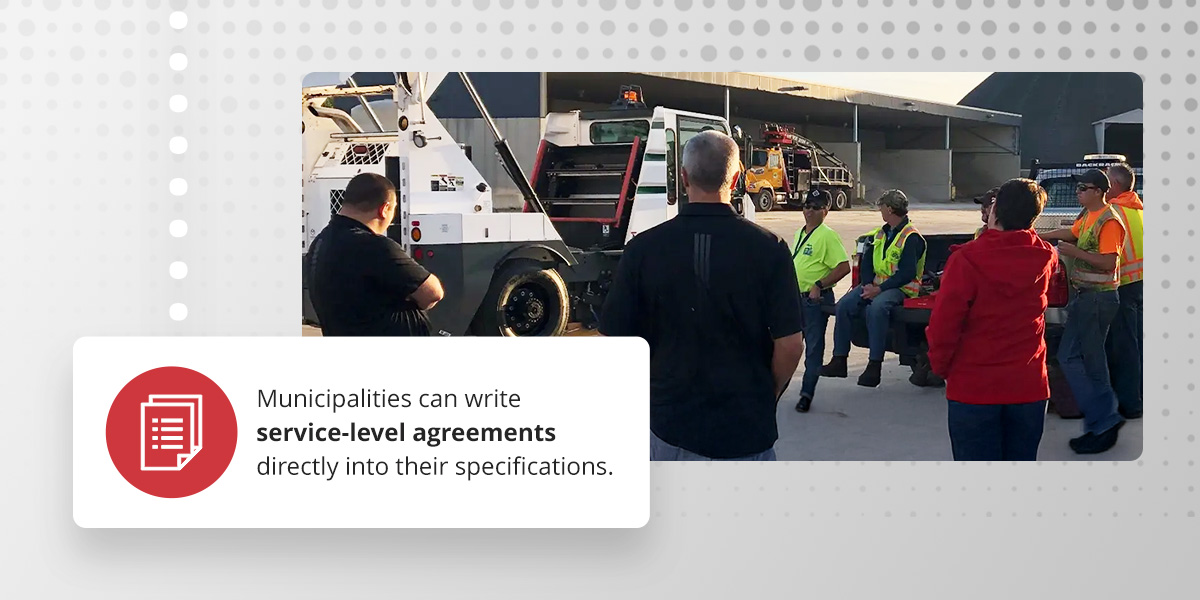
Municipalities can write service-level agreements directly into their specifications. For example, if a bid requires a four-hour on-site response time for critical repairs, any vendor unable to meet that promise is disqualified. This often leaves the full-service dealer as the sole compliant provider, creating a defensible, service-based justification for a sole source.
State and Federal Statutes for Sole-Source Purchasing
Procurement laws are managed at the state level. Many states have explicit statutes recognizing the need for noncompetitive purchasing. There are also some federal standards to note.
Ohio
Ohio law allows for sole-source procurement for wastewater treatment systems when a municipality can prove unique system integration or proprietary technology. In 2025, bidding thresholds rose to over $75,000 for many entities, potentially simplifying purchases below this threshold.
Indiana
The Indiana State Board of Accounts points to Indiana Code (IC) 5-22-10, which authorizes special purchasing methods. This statute allows for no-bid purchases to ensure compatibility with existing equipment, providing a clear legal basis for fleet standardization arguments.
Michigan
Municipal purchasing manuals in Michigan often contain standardization clauses that permit sole-sourcing for the purpose of maintaining a uniform fleet of vehicles or equipment.
Pennsylvania and Kentucky
Both states have provisions for noncompetitive negotiation. Pennsylvania Statutes Title 62 Pa.C.S.A. Procurement § 515 and Kentucky Revised Statutes 45A allow this process for items where no comparable product or service exists in the open market.
Federal Standards
It is also important to note that when federal award money is used for a purchase, federal standards apply. For instance, procurements made using grants from the U.S. Department of Justice must adhere to the rules outlined in 2 C.F.R. § 200.320(c). The Office of Justice Programs, which adopts these rules, often requires written preapproval for sole-source contracts exceeding the simplified acquisition threshold.
Thorough documentation matters when complying with local, state and federal purchasing requirements.
How to Write a Sole-Source Justification Document
A strong sole-source justification document should be built on a three-pronged framework:
- Define the unique need: Clearly state the specific operational requirement, technological capability or service standard that’s essential. For example, you might note, “The equipment must be 100% compatible with our existing CUES software platform.”
- Document market research: Explain the steps taken to find alternatives and show that none exist. This demonstrates due diligence. For example: “We confirmed with the manufacturer that this dealer is the sole territorial provider and no other vendor can supply this proprietary technology.”
- Provide a cost-benefit analysis: Quantify the value. Explain how this purchase saves money on training and parts inventory or how the guaranteed service uptime prevents costly operational failures.
A true vendor partner can assist public works directors in drafting the technical and service-based components of these justifications.
Alternatives to Sole-Sourcing
If a sole-source justification is rejected or judged as too burdensome, there’s an excellent “plan B” that avoids the local request for proposal process. Cooperative purchasing networks like Sourcewell, CoPro+ and COSTARS have already completed a national competitive bidding process on your behalf.
By joining these programs, often for free, municipalities can purchase vital equipment and services using a prenegotiated, nationally vetted contract. It provides the speed and convenience of a sole-source purchase with the compliance of a competitive bid. This gives you access to the right equipment without the administrative hassle.
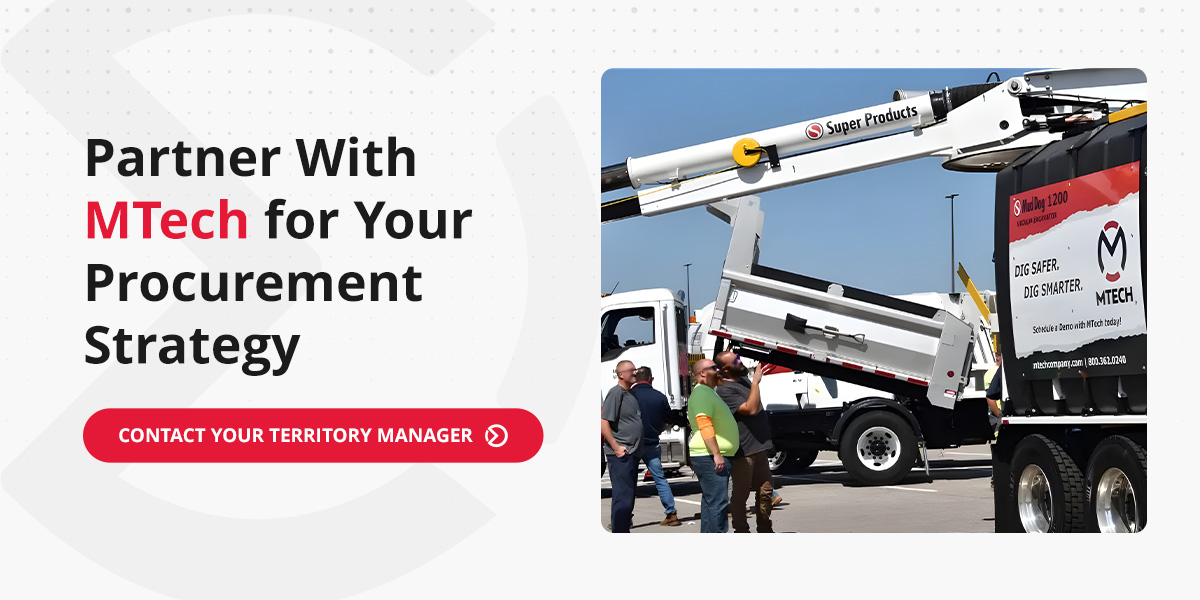
Partner With MTech for Your Procurement Strategy
Successfully acquiring specialized assets requires a procurement strategy that’s as robust as the equipment itself. MTech Company serves as your compliance partner, helping you navigate the complexities of public purchasing.
Our team is here to provide the documentation and expertise you need to explore sole-source supplier purchasing options to standardize your fleet or use cooperative purchasing contracts to expedite an acquisition.
Contact your Territory Manager today to request a Sole Source Justification Packet or to learn more about our available cooperative purchasing contracts.